
The Science of Cooling Climate Quickly
Earth’s air conditioners are breaking down.
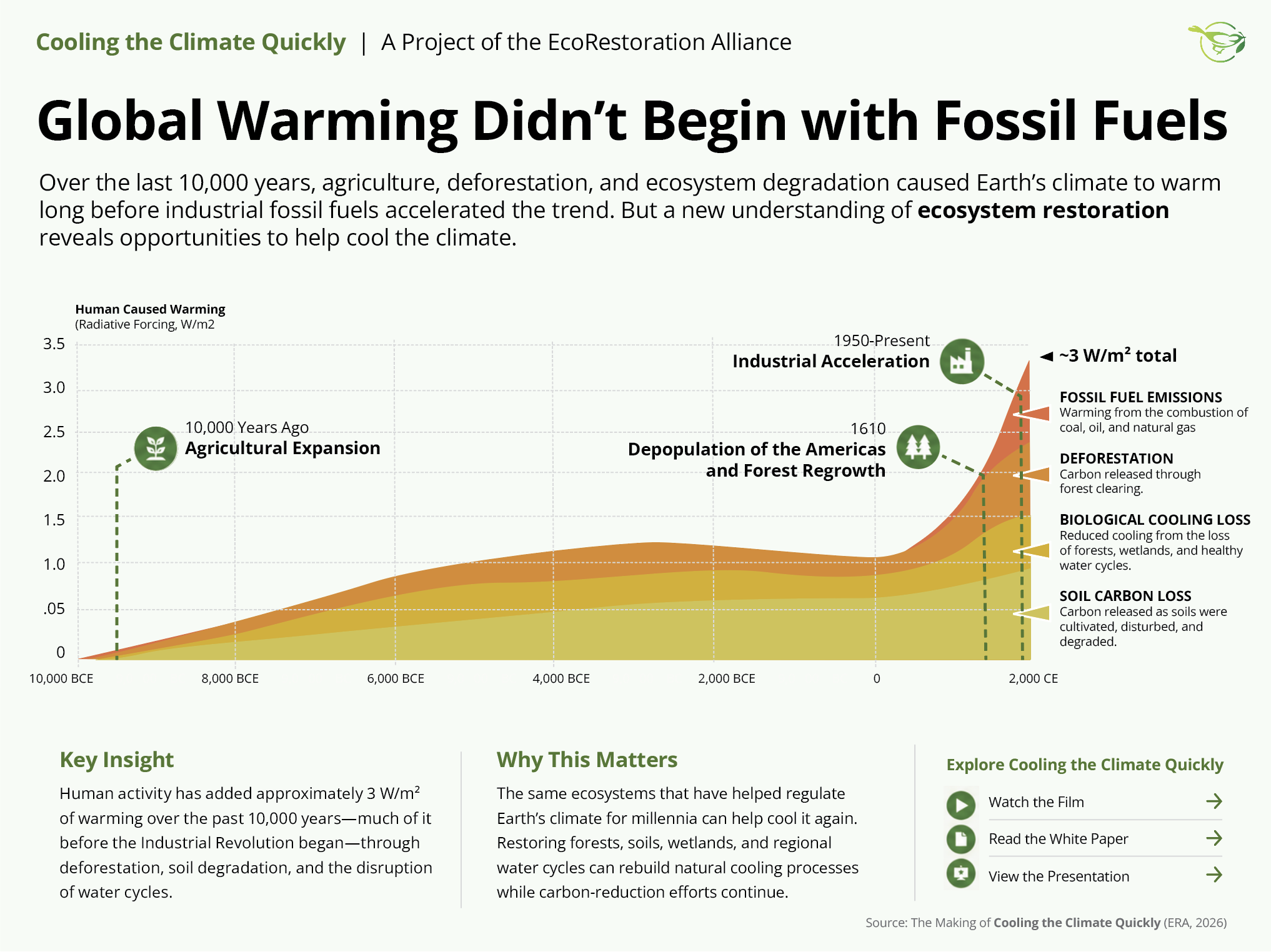
Forests, soils, wetlands and ocean life form a living climate-control system — moving water, seeding clouds, and shading land. Climate policy measures carbon and misses most of this. ERA’s whitepaper, Cooling Climate Quickly, quantifies the blind spot — and the fastest, cheapest cooling lever we have.
Read the paperThe carbon-only blind spot
22–38%1Change 1 — was 15–45%
v10i reconciled share of human-caused forcing (was v10f-era 15–45%).
of today’s climate forcing traces to degraded ecosystems, invisible to carbon-only accounting.
3–7×2Change 2 — was 4–10×
v10i reconciled ratio; also aligns this page with /ccq (which said 3×) — the two disagreed.
how far conventional carbon math undervalues restoration’s climate benefit.
2–4°C
of local surface cooling that restored ground cover delivers within months.
Restored ground cover cools the surface within months; a full cool dome of this magnitude builds over one to two decades.
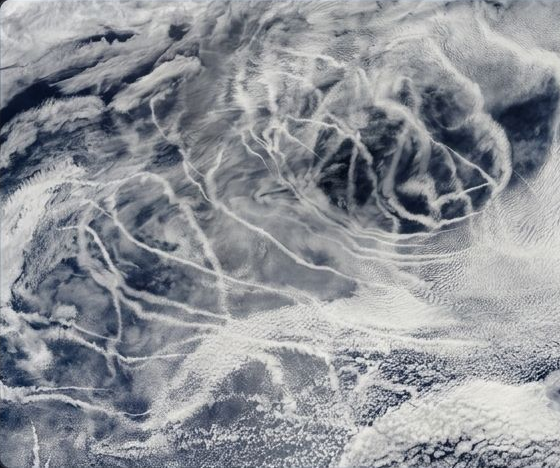
A natural experiment proved the lever is real
In 2020, new shipping-fuel rules abruptly cut sulfur emissions — and with them, the bright ship-track clouds that had been quietly shading the oceans. Warming jumped. It was an accidental planetary experiment, and its lesson cuts both ways: if thinner clouds can heat the planet that fast, restoring the biological processes that brighten and seed clouds can cool it. Biology is not a bystander in the climate system. It is the control knob we’ve been ignoring.
How nature cools the planet
Water
A living landscape is a water pump — vegetation moves rain inland and re-wets the small water cycle, cooling land as it works.
Clouds
Life seeds clouds: forests release the biological particles around which droplets form. Forests don’t simply grow where it rains — they ensure that it rains where forests grow.
Life
Soil, fungi, whales and watersheds form one connected cooling engine; restore the parts and you restore the function.
Cooling Climate Quickly
The whitepaper quantifying how ecosystem degradation drives 22–38%3Change 3 — was 15–45%
Match the reconciled share. of climate forcing — and why restoration is the fastest, cheapest cooling lever we have.
Co-developed by human and artificial intelligence, reviewed by humans.
Contributors

Brian von Herzen

Peter Bunyard

Rob de Laet

Didi Pershouse

Stuart Cowan
For funders
CCQ for Family Offices
The investment-grade case for restoration as the highest-leverage climate allocation available today.
View the deck →CCQ for Philanthropy
Where a philanthropic dollar buys the most cooling — the leverage points conventional climate math misses.
View the deck →If CCQ changes your map of what’s fundable, let’s talk.
Fund a leverage point